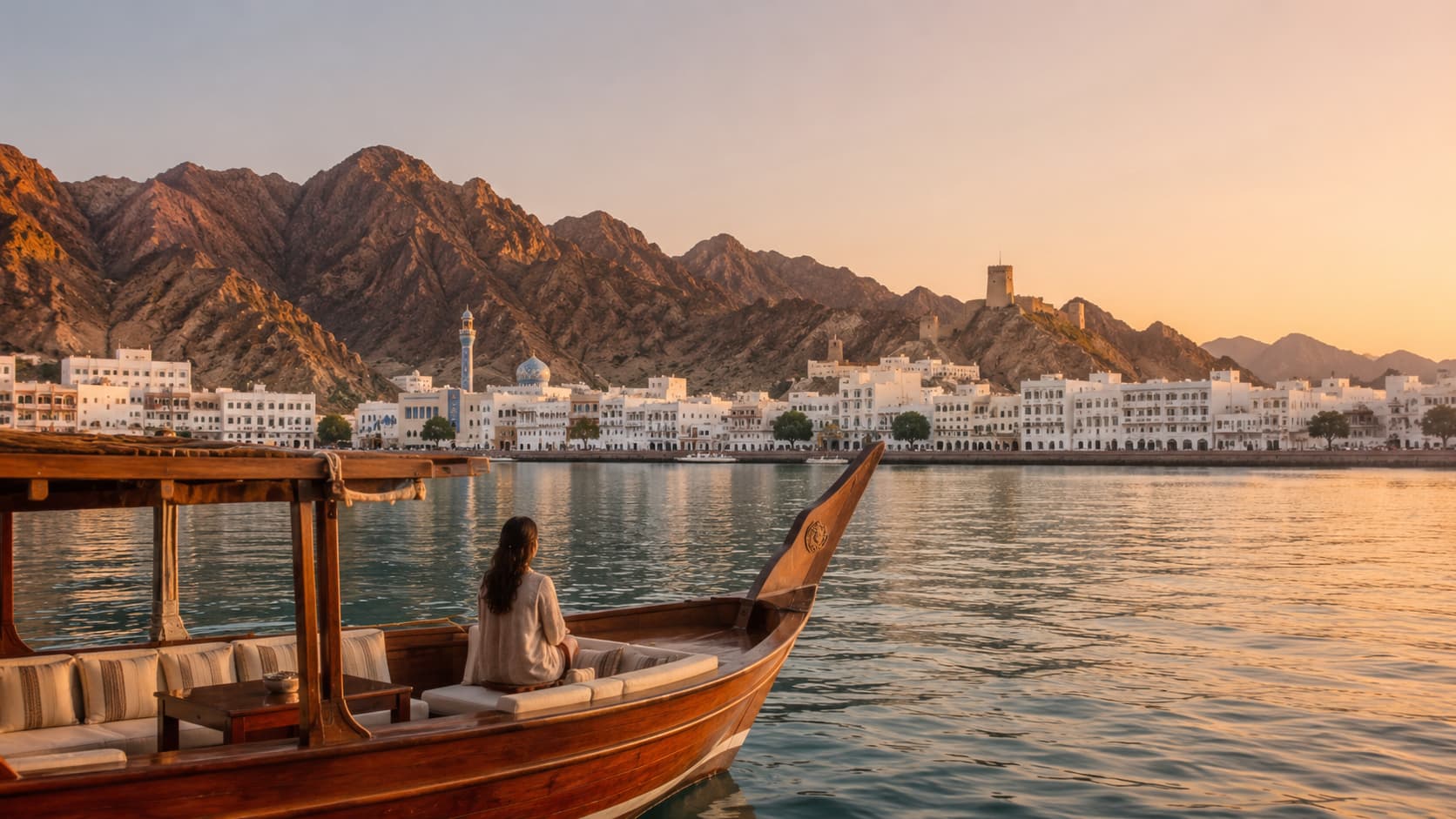
Every developer knows the feeling. Weeks of staring at the same screen, shipping feature after feature, until your brain feels like a browser with two hundred tabs open and none of them responding. At some point the fix is not another coffee or a fresh branch. It is a hard reboot, the kind where you actually close the laptop and go somewhere the notifications cannot follow.
Muscat is one of the best places on earth to do exactly that. Oman’s capital sits where dramatic mountains meet the Gulf of Oman, wrapped around old souqs, white mosques, and a coastline that runs into desert. It is calm, genuinely safe, remarkably uncrowded compared to the rest of the region, and English is widely spoken, so the logistics never become their own stressful side quest. After months heads-down building a web app, a few days here does more for your head than any productivity hack.
The trick is choosing the right experiences. A licensed local guide turns a drive into an education. Small or private groups keep the pace yours. For the desert and the wadis you want a proper 4WD and an operator with real safety standards, not the cheapest jeep in the car park. And you want honest pricing and easy booking, because the whole point is to lower your stress, not add to it.
Here are the best ways to reboot in and around Muscat, ranked.
1. Book the Whole Trip in One Place
Before you start stitching together separate operators for the city, the desert, and the coast, look at the whole picture first. Muscat.tours is a platform built specifically around this destination, so instead of comparing a dozen scattered listings you get the tours laid out clearly with the details that matter, what each one covers, how long it takes, and who it suits.
That focus is exactly what a screen-tired traveler wants. You can see at a glance whether a half-day city tour or a full desert overnight fits your energy, combine a couple of experiences into a clean itinerary, and book it all without decision fatigue. First timers to Oman stop guessing, and anyone short on planning time gets a sorted trip fast.
You can compare Muscat tours and build an itinerary here and lock it in before you fly, which matters because the best desert and wadi trips fill up in peak season. Think of it as choosing a good framework instead of writing everything from scratch.
Best for anyone who wants a sorted, low-stress trip rather than a pile of separate bookings. If you already know one specific tour you want, book that directly.
2. The Culture Reboot: Muscat City Tour
Start slow, in the city itself. A half or full day city tour hits the Sultan Qaboos Grand Mosque, the old Muttrah Souq, Al Alam Palace, and the Royal Opera House, usually in air-conditioned comfort with a guide who fills in the history.
The Grand Mosque alone is worth the trip. It holds one of the largest hand-woven carpets in the world and a chandelier to match, and the sheer precision of the architecture is the kind of thing anyone who appreciates good design will quietly geek out over. Then the souq flips the mood entirely, all frankincense, silver, and narrow lantern-lit alleys.
Dress modestly for the mosque, which means covered shoulders and knees, and women need a headscarf. The mosque is also closed to non-worshippers on Fridays and in the afternoons, so morning visits are the move.
Best for a gentle first day that eases you in. Not the pick if you came purely for adrenaline.
3. The Full Disconnect: Wahiba Sands Desert Safari
This is the real reboot. A 4WD safari into Wahiba Sands, properly called the Sharqiya Sands, takes you over towering dunes to a Bedouin camp, and out there the signal simply stops. No pings, no Slack, no CI failures. Just silence and a horizon of gold.
The classic version is a full day of dune bashing with an overnight at a desert camp, which is where it earns its keep. Once the sun drops, the stars come out with a clarity you forget exists when you live under city light and blue screens. It is the closest thing to true airplane mode there is.
One important note: the desert camps close through the summer, roughly June to September, when the heat is brutal. Aim for the cooler months.
Best for anyone who wants a genuine, off-grid disconnect. Skip the overnight if you are not comfortable being truly unplugged for a night.
4. The Nature Reset: Wadi Shab and Bimmah Sinkhole
If your idea of clearing your head involves moving your body, spend a day at Wadi Shab. It is a gorge about two hours down the coast where a walk along the valley floor leads to a chain of turquoise pools you can swim in, ending at a hidden waterfall inside a cave. The hike is moderate, the water is cold and clear, and the whole thing resets you in a way a gym session never quite manages.
Most trips pair it with the Bimmah Sinkhole, a startlingly blue swimming hole that looks almost fake in the middle of the rocky coast. Wadi Bani Khalid is the other popular wadi if you prefer easier access to the water.
Bring proper shoes you can walk and swim in, and note the final stretch to the waterfall involves a short swim, so this is not ideal for non-swimmers.
Best for active travelers who recharge by doing rather than sitting.
5. The Slow Cruise: Dolphin Watching and a Sunset Dhow
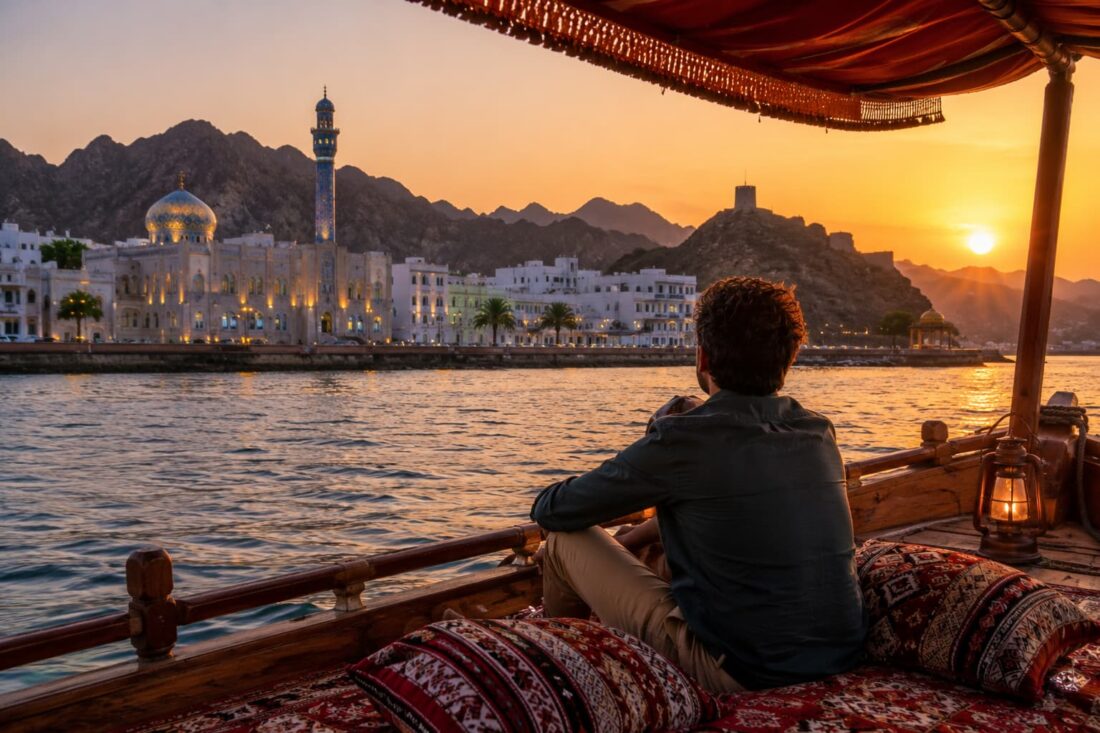
For the lowest-effort reset on the list, get on the water. Morning dolphin-watching boats leave from marinas like Bandar Al Rowdha and Al Mouj, and Muscat’s coast has such reliable pods that sightings are common, often with snorkeling near the Daymaniat Islands thrown in.
If mornings are not your thing, a sunset dhow cruise along old Muscat is pure decompression, sailing past Portuguese watchtowers and fishing villages as the light goes gold. It is the analog version of watching a progress bar fill, except this one actually relaxes you.
Book the morning slot for dolphins, since they are most active early and the sea is calmer.
Best for travelers who want to switch off without breaking a sweat.
A Few Practical Things Before You Go
Give Muscat three to four days at minimum. One easy city day, one desert overnight, one for a wadi, and a slow morning on the water. If you have longer, add a day trip to Nizwa for its fort and Friday goat market, or up into the Jebel Akhdar and Jebel Shams mountains for cool air and the famous Balcony Walk.
Timing matters a lot here. October through April is the sweet spot, with comfortable daytime temperatures and pleasant nights. Avoid June through August, when Muscat bakes past 40 degrees and the desert camps shut. The best-time breakdown from Lonely Planet is worth a look before you commit to dates.
Book the desert overnight and popular wadi trips in advance during peak months. For planning the wider trip, Oman’s official tourism site is a clean starting point, and it pairs well with any related travel guides already on the site.
Pack light layers, modest clothing for mosques and villages, sunscreen, and shoes that handle both trails and water. Note that Ramadan and Eid shift each year and change opening hours, so check the dates if you are sensitive to that.
Choosing the Right Reboot for You
Muscat rewards travelers who match the trip to the kind of break they actually need.
Start by comparing your options through Muscat.tours so you plan without the decision fatigue. Want a gentle cultural start, take the city tour. Want to truly vanish for a night, do the Wahiba Sands overnight. Want to move and swim, head to Wadi Shab. Want to switch off without effort, get on a boat.
Then, when you fly home and open the laptop again, you come back to your responsive design work and everything else with a clearer head. A real reboot beats a coffee refill every time.
Author note: recommendations here are based on well-established Muscat experiences and licensed local operators. Prices, seasons, and opening hours change, so confirm the current details directly before you book.